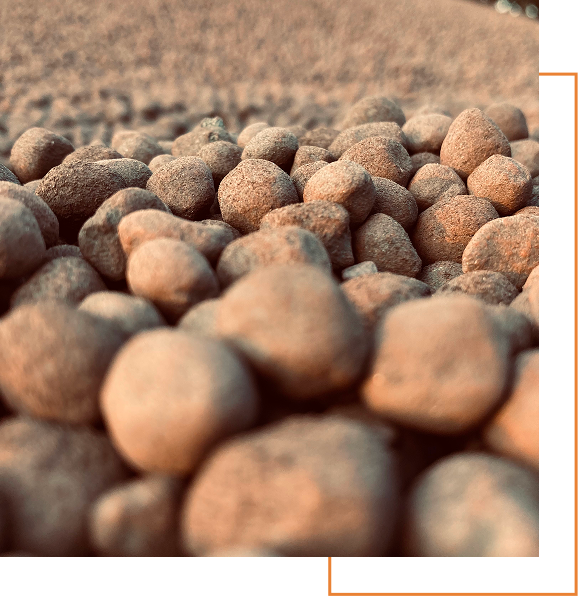
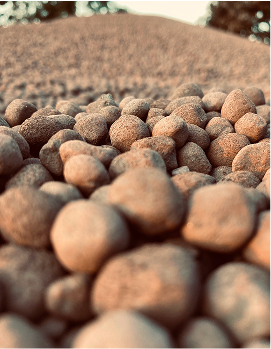
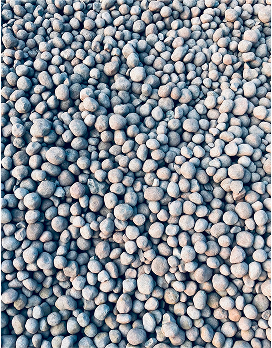
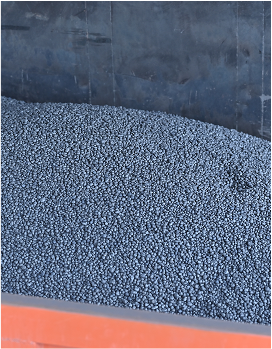
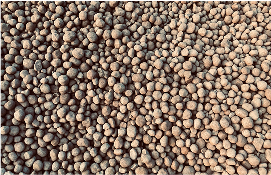
Sponge iron is a metallic product produced through the direct reduction of iron ore and/or iron ore pellets, with a typical metallic iron content ranging from 80-88%. The manufacturing process is carried out in a rotary kiln operating at controlled rotational speeds and temperatures. It serves as a key raw material in steel manufacturing and is commonly used as a substitute for steel scrap in steel melting operations.
Manufacturing Process: We use a combination of iron ore, non-coking coal, and dolomite in a rotary kiln to produce dust-free sponge iron.
Reduction Process: The reduction occurs in a solid state at temperatures between 850-1100°C. Coal is used both as a reductant and a heat source.
Quality Assurance: We adhere to strict standards to ensure each batch of sponge iron supports industry safety and efficiency.
Properties
Key Properties of Sponge Iron
High degree of metallization
Ensures superior quality and performance.
Lower sulphur and phosphorus content
Each batch meets stringent uniformity standards.
Uniform and consistent quality
Minimizes impurities for better steel quality.
Minimal Dust Production
Enhances safety and reduces cleanup during handling.
Chemical properties
Elements
Sponge Iron Lumps
Sponge Iron Fines
Fe (M)
80 ± 2%
80 ± 2%
Fe (T)
90 ± 2%
80 ± 2%
Mtz %
88 ± 2%
80 ± 2%
p
0.06%
80 ± 2%
s
0.03%
0.04%
c
0.10-0.25%
0.25-0.35%
Non-magnetic
0.8% (max.)
1% (max.)
Sio2 + Al2O3
6% (max.)
806% (max.)
Sio2 + Al2O3
6% (max.)
6% (max.)
Cao + Mgo
6% (max.)
1% (max.)
Size(mm)
3 to 2
0 – 4 mm
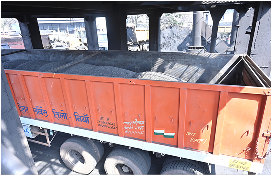
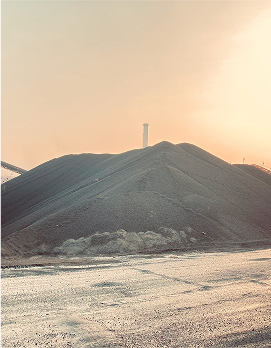
Our Production in Pictures
A Closer Look at the Processes That Define Our Excellence